


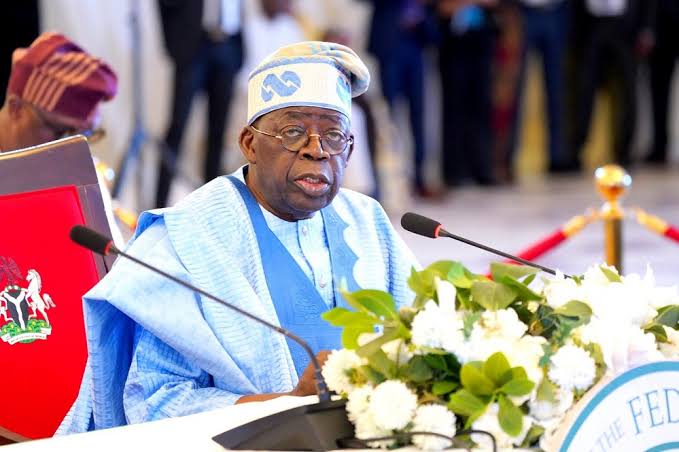
President Bola Ahmed Tinubu has called for urgent improvements in Nigeria’s judicial processes, warning against procedural weaknesses that allow corruption cases involving politically exposed persons and organised criminal networks to suffer prolonged delays.
The President’s intervention has reopened a familiar debate within Nigeria’s justice system: why do some corruption cases remain unresolved for years despite investigations, arrests and extensive public attention?
Tinubu made the call in Abuja on Tuesday, October 13, during the eighth annual Economic and Financial Crimes Commission (EFCC) and National Judicial Institute (NJI) Capacity Building Workshop for Judges and Justices.
His remarks were reported on Wednesday.
The President emphasised the need for an independent and reform-oriented judiciary capable of addressing increasingly sophisticated financial crimes.
Corruption Trials and the Problem of Delay
Nigeria’s anti-corruption campaign has frequently encountered criticism over the length of criminal proceedings.
Cases involving alleged financial misconduct can become prolonged through preliminary objections, jurisdictional disputes, interlocutory applications and other procedural issues.
While defendants are entitled to challenge the legality of proceedings against them, the repeated use of procedural applications can create difficult questions about the balance between protecting constitutional rights and ensuring timely justice.
Tinubu urged judicial officers to address loopholes that could be exploited to frustrate the prosecution of financial and economic crimes.
The President also called for a review of prosecution strategies and stronger institutional capacity.
His remarks suggest that improving the fight against corruption will require more than arrests and investigations.
It will also demand competent prosecution, efficient case management and judicial processes capable of reaching legally sound conclusions within reasonable periods.
Can Nigeria Deliver Justice Without Sacrificing Fair Hearing?
The President’s position raises an important constitutional question.
Section 36 of Nigeria’s Constitution guarantees the right to a fair hearing within a reasonable time.
That protection applies to every accused person, including individuals facing allegations of corruption.
Consequently, efforts to accelerate corruption trials must remain consistent with constitutional safeguards.
A faster trial cannot become a justification for denying defendants access to legal representation, restricting legitimate applications or weakening the prosecution’s obligation to prove criminal allegations beyond reasonable doubt.
Equally, procedural protections should not be manipulated to defeat the administration of justice.
The challenge is developing a judicial system that can distinguish legitimate defence strategies from abusive litigation tactics.
Judges, Prosecutors Face Renewed Expectations
The EFCC/NJI workshop provides an opportunity for judicial officers and other stakeholders to examine the legal and practical difficulties associated with economic and financial crime cases.
Financial crime prosecutions increasingly involve complex transactions, electronic records, corporate structures and evidence requiring specialised knowledge.
These challenges make judicial training and prosecutorial competence particularly important.
They also highlight the need for proper investigation before charges are filed.
Poorly prepared prosecutions can collapse even where investigators believe substantial wrongdoing has occurred.
In such circumstances, the problem may not necessarily be judicial delay but weaknesses in evidence gathering or prosecution.
The Bigger Question for Nigeria’s Justice System
For Nigerians, the success of anti-corruption reforms will ultimately depend on measurable results.
Those results include credible investigations, timely proceedings, convictions where guilt is proved and acquittals where the prosecution fails to establish its case.
Public confidence also depends on whether the law is applied consistently, irrespective of political influence, financial standing or social position.
Tinubu’s latest appeal places renewed responsibility on the judiciary and anti-corruption institutions to demonstrate that Nigeria can prosecute complex financial crimes without compromising the rule of law.
Tinubu Demands Faster Corruption Trials in Nigeria


behind Games Village, Abuja
5A, CGH, Games Village, Abuja