



Dr. Monday Onyekachi Ubani, SAN, has taken an emotional journey through his formative years at the University of Nigeria, describing the institution as a defining influence that shaped his intellect, character, friendships and eventual career in law and public service.
Speaking at a gathering of the University of Nigeria Alumni Association, Abuja Chapter, Ubani recalled his six-year journey through the Nsukka and Enugu campuses between 1983 and 1989, declaring that the university did much more than award him a degree, it helped make him the man he eventually became.
“There are places we visit, places we live in, and places that live in us,” Ubani told fellow alumni.
“For me, the University of Nigeria is not merely a place I attended between 1983 and 1989. It is a place that became part of my intellectual DNA.”
FROM POLITICAL SCIENCE TO LAW
Ubani’s journey at UNN began in 1983 when he enrolled at the Nsukka Campus to study Political Science.
He recalled an intellectually vibrant university environment where students debated politics, ideology, governance, football and Nigeria’s future, describing those years as a period of “intellectual awakening.”
According to him, Political Science introduced him to questions about power, government, institutions and the relationship between leaders and the governed. It also taught him that university education extended beyond examinations to developing the courage to interrogate society and ask difficult questions.
His academic journey took a significant turn in 1985 when he moved to the Enugu Campus to study Law.
Looking back decades later, the Senior Advocate said the transition was not a departure from his intellectual journey but a continuation of it.
“Political Science had taught me to understand power. Law would teach me how power ought to be restrained,” he said.
“Political Science introduced me to government and institutions. Law introduced me to rights, duties, justice and accountability.”
‘THEY STILL CALL ME UBANI CJ’
Beyond academics, Ubani recalled an active involvement in university politics and leadership.
In his first year at the Enugu Campus, he became a member of the university’s House of Representatives, representing a defined constituency. His involvement in student leadership would later culminate in his emergence as Chief Judge of the entire university in 1988.
Decades later, he revealed, some of his former classmates still affectionately call him “Ubani CJ.”
For Ubani, however, some of the most enduring lessons from university life were acquired outside lecture halls.
He remembered hostel life, friendships, long walks, sharing meals when money was scarce, borrowing books, waiting anxiously for examination results and learning to coexist with people from different backgrounds and with different opinions.
“The university was a laboratory of life. We entered as individuals. We left as members of a community,” he recalled.
FROM UNN STUDENT TO SENIOR ADVOCATE
More than four decades after first entering Nsukka as a young Political Science student, Ubani said he could now clearly trace much of his professional and intellectual development to his years at the University of Nigeria.
He subsequently became a lawyer, attained the rank of Senior Advocate of Nigeria and has participated extensively in public affairs, constitutional debates, professional organisations and national discourse.
Yet, he said, the young student who arrived at Nsukka in 1983 could hardly have imagined where his education would eventually take him.
“Education does not tell you exactly where you are going. It equips you for destinations you cannot yet see,” he said.
‘AI CANNOT SUBSTITUTE FOR CHARACTER’
Turning to the transformation of university education since the 1980s, Ubani acknowledged the enormous opportunities technology has given today’s students, particularly their almost instantaneous access to information.
But he warned that technology must never be mistaken for education itself.
“Information can be obtained from a computer. Wisdom cannot. A search engine can provide answers. It cannot teach judgment. Artificial intelligence can process enormous quantities of information. It cannot substitute for character.”
He argued that the fundamental responsibility of a university remains the development of the human mind and the production of men and women capable of thinking, questioning, leading and serving society.
UBANI TO STUDENTS: LEAVE WITH MORE THAN A CERTIFICATE
Ubani also challenged today’s university students not to measure their education solely by grades and certificates.
While acknowledging the importance of academic performance and professional success, he urged students to build friendships, read beyond their syllabuses, listen to opposing opinions, participate actively in university life, communicate effectively and cultivate independent thought.
“Do not leave the university merely with a certificate. Leave with a philosophy of life,” he advised.
“Because eventually, the certificate will hang on a wall, but the character you develop will travel everywhere with you.”
ALUMNI MUST TURN MEMORIES INTO RESPONSIBILITY
Ubani’s message was equally directed at fellow alumni.
He described an alumni association as a “second university” — one that provides memory, fellowship and responsibility after the first university has provided knowledge.
According to him, alumni must go beyond reminiscing about their university years and consider what they are leaving behind for younger generations.
He identified scholarships, mentorship, infrastructure, research support, professional networks and opportunities as areas through which former students could give back.
“Reminiscence should not become nostalgia without responsibility,” he said. “If we truly remember where we came from, then our memories should inspire service.”
‘THE UNIVERSITY OF NIGERIA WAS PART OF THE MAKING OF ME’
Concluding his reflections, Ubani said describing himself simply as someone who attended the University of Nigeria would fail to capture the institution’s impact on his life.
“I would rather say: ‘The University of Nigeria was part of the making of me.’”
He recalled arriving at Nsukka in 1983, moving to Enugu in 1985 and graduating in 1989, but said what he took away went considerably beyond a university degree.
He left with friendships, memories, intellectual curiosity, a deeper understanding of Nigeria and a conviction that knowledge carries responsibility.
For the Senior Advocate, alumni gatherings therefore serve a purpose deeper than reunion: they allow former students to remember their beginnings, appreciate the distance they have travelled and reflect on what lies ahead.
“Thank you for the years. Thank you for the lessons. Thank you for the friendships. Thank you for the memories. And, most importantly, thank you for helping to make us who we became,” Ubani said.
He concluded with a tribute to the institution and its alumni community:
“Long live the University of Nigeria. Long live the spirit of Lionism. And long live the enduring fellowship of the University of Nigeria Alumni Association, especially the Abuja Chapter.”
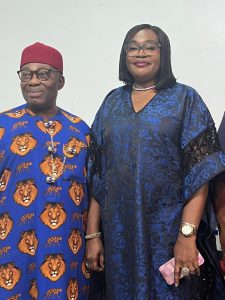
SEE MOMENTS FROM THE EVENT:







behind Games Village, Abuja
5A, CGH, Games Village, Abuja