



The immediate Past President of the Nigerian Bar Association, Mazi Afam Osigwe, SAN, has called on judges, prosecuting agencies and lawyers to take responsibility for the persistent delays in the prosecution of high-profile financial crime cases in Nigeria.
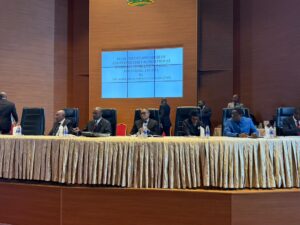
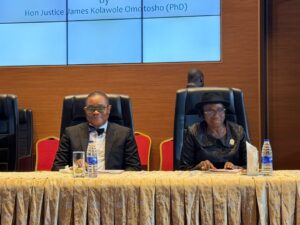
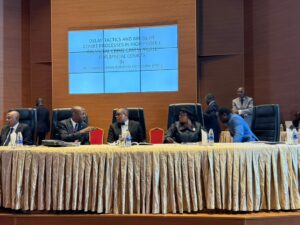
Osigwe made the call while serving as a discussant at the EFCC–National Judicial Institute (NJI) Capacity Building Workshop for Justices and Judges on Curbing Economic and Financial Crimes, held under the theme, “Investigation and Prosecution of Economic and Financial Crimes in a Digital Age.” His session focused on “Delay Tactics and Abuse of Court Processes in High-Profile Financial Crime Cases.”
Contributing to a paper presented by Justice James Kolawole Omotosho of the Federal High Court, Abuja Division, Osigwe agreed that Nigeria’s legal framework for tackling economic and financial crimes is substantially adequate but stressed that the principal challenge lies in its effective implementation.
He observed that the failure to consistently apply existing legal provisions, coupled with practices that unnecessarily prolong proceedings, continues to undermine the speedy administration of criminal justice.
Addressing the conduct of prosecuting agencies, Osigwe highlighted the inconsistency that sometimes arises when the Economic and Financial Crimes Commission (EFCC) grants bail to a suspect during investigation but subsequently opposes the same person’s bail application when the matter comes before the court. He noted that such practices contribute to delays and called for greater consistency in the handling of bail matters.
He also drew attention to the role of the courts in contributing to delays, particularly where excessively stringent bail conditions are imposed. According to him, both prosecuting agencies and the judiciary must examine their respective practices to ensure that they do not inadvertently frustrate the expeditious determination of cases.
Osigwe further lamented that the objectives of the Administration of Criminal Justice Act (ACJA), 2015, are often defeated by the failure to give practical effect to its provisions on day-to-day trials and the prevention of unnecessary adjournments. He urged judges to deploy the powers available under the law to ensure that criminal proceedings progress without avoidable interruptions.
On the use of confessional statements, he supported the proposal that the prosecution should, where applicable, produce video recordings of the process through which such statements were obtained. He noted that effective implementation of the relevant provisions of the ACJA would help courts determine the circumstances surrounding confessional statements and reduce the time consumed by trial-within-trial proceedings while safeguarding defendants’ rights.
The senior advocate also emphasized the importance of thorough investigation before the commencement of prosecution. He urged prosecuting agencies to ensure that investigations are sufficiently completed before charges are filed, warning that repeated amendments to charges can waste valuable judicial time because amended charges must be read again to defendants.
He called on judges to take a firmer position against the misuse of court processes, including instances where lawyers advance arguments based on obsolete legal provisions or engage in conduct that undermines the orderly conduct of proceedings. He advocated appropriate professional disciplinary referrals where lawyers engage in misconduct, noting that accountability would serve as a deterrent and promote greater professionalism at the Bar.
On the question of whether Nigeria requires special courts to handle high-profile financial crime cases, Osigwe aligned himself with Justice Omotosho’s position that specialised judges, rather than the creation of entirely new courts, offer a more practical solution.
He observed that establishing special courts could involve significant bureaucratic and institutional hurdles. Rather than concentrating exclusively on creating new judicial structures, he urged the relevant authorities to strengthen existing courts, improve their efficiency, and equip judicial officers to handle complex financial crime cases more effectively.
Osigwe also questioned the practice of taking judges away from their courtrooms for training programmes while pending cases remain unattended. While acknowledging the importance of continuing judicial education, he encouraged the NJI to develop flexible training arrangements that would enable judges to acquire specialised knowledge without unnecessarily disrupting court proceedings.
He proposed that the Institute leverage technology to provide virtual courses and other flexible learning options, allowing judicial officers to undertake professional development alongside their judicial responsibilities. He further advocated a structured certification system through which judges could acquire specialised competence in areas such as financial crimes, criminal procedure, digital evidence and other emerging areas of law.
According to him, a more deliberate approach to judicial education would improve the capacity of judges to manage complex cases, address evidential issues promptly, and deliver decisions without unnecessary adjournments.
Emphasising the need for technological innovation in the justice sector, Osigwe encouraged judges to embrace available tools that could improve courtroom management and accelerate the determination of cases. He noted that technology, when properly deployed, could reduce procedural bottlenecks and support more efficient judicial processes.
He stressed that the responsibility for ending delays in criminal proceedings does not rest with the judiciary alone. Lawyers, judges and prosecuting agencies all have important roles to play in ensuring that cases are properly investigated, diligently prosecuted, and efficiently adjudicated.
Osigwe concluded by urging all stakeholders in the criminal justice system to move beyond discussions about reform and focus on practical measures that would give effect to existing laws, strengthen institutional capacity and promote timely justice.
His intervention reinforced the central argument of the paper presented by Justice Omotosho: that the effective prosecution of high-profile financial crimes requires more than the establishment of special courts. It demands specialised judicial expertise, competent investigation and prosecution, effective courtroom management, technological innovation and the consistent enforcement of existing legal provisions.
Photos:



Related Stories on LegalLinkz
- Suswam’s ₦3.1bn Trial Nears Final Stage After 11 Years
- Stakeholders Call for Urgent Digitization of Nigeria’s Judiciary at 2025 JIT Summit
- 2025 Supreme Court Legal Year: NBA President Urges Judiciary to Reclaim Role as Last Hope of the Common Man
- Federal Ministry of Information—Tinubu to Judiciary: Probe Prosecution Strategies, Seal Procedural Gaps
- Source


behind Games Village, Abuja
5A, CGH, Games Village, Abuja