January 1 tax law implementation Nigeria. The Chairman of the Presidential Committee on Fiscal Policy and Tax Reforms, Mr. Taiwo Oyedele, has insisted that the January 1, 2026 implementation date for Nigeria’s newly enacted tax laws remains non-negotiable, despite growing opposition and controversy surrounding the reforms.
Oyedele made the assertion on Friday in Lagos while briefing journalists after a meeting with President Bola Tinubu.
The meeting was also attended by the Chairman of the Federal Inland Revenue Service (FIRS), Mr. Zacchaeus Adedeji, and the Chairman of the National Tax Policy Implementation Committee, Mr. Joseph Tegbe.
According to Oyedele, the Federal Government is committed to commencing the Nigerian Tax Act and the Nigerian Tax Administration Act as scheduled, stressing that the reforms are designed to ease the tax burden on Nigerians and stimulate economic growth.
“The plan to commence the new laws on January 1, 2026, will go ahead as planned because these reforms are meant to provide relief to the Nigerian people,” he said.
He explained that under the new tax regime, about 98 per cent of workers would either pay no Pay As You Earn (PAYE) tax or pay significantly lower amounts.
He added that approximately 97 per cent of small businesses would be exempted from Corporate Income Tax, Value Added Tax (VAT), and Withholding Tax, while large businesses would also benefit from reduced tax obligations.
“The whole idea is to promote economic growth, inclusivity, and shared prosperity for our people,” Oyedele stated.
The committee chairman also welcomed the position of the National Assembly amid allegations of discrepancies in the tax laws, assuring that the Federal Government is open to engaging lawmakers and stakeholders to address concerns raised by Nigerians, including opposition figures.

The new tax laws have, however, been mired in controversy. A member of the House of Representatives, Abdussamad Dasuki, recently alleged that there were differences between the versions of the tax bills passed by the National Assembly and those later gazetted and made available to the public.
Dasuki argued that his legislative rights had been breached, claiming that lawmakers had not been given access to the harmonised versions of the bills certified by the Clerk of the National Assembly and transmitted to the President.
“Before you can say there is a difference between what was gazetted and what was passed, we don’t even have what was passed,” he said.
“Only lawmakers can authoritatively say what was sent to the President, and even then, many of us do not have the certified harmonised copies.”
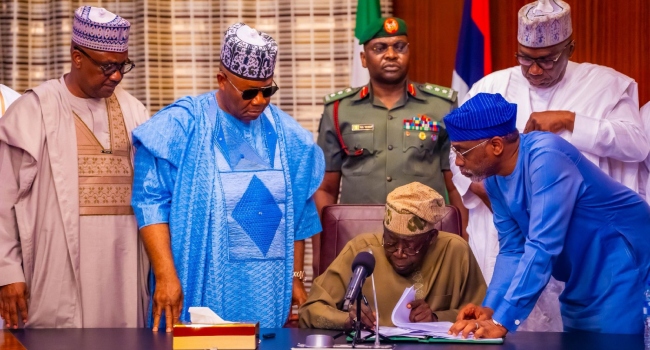
President Tinubu recently signed four tax reform bills into law, a move the Federal Government has described as the most far-reaching overhaul of Nigeria’s tax system in decades.
The laws include the Nigeria Tax Act, the Nigeria Tax Administration Act, the Nigeria Revenue Service (Establishment) Act, and the Joint Revenue Board (Establishment) Act.
The reforms, which faced stiff resistance from some federal lawmakers, particularly from the northern part of the country, are all scheduled to take effect on January 1, 2026, and will operate under a single authority, the Nigeria Revenue Service.
Despite the controversy, the Presidency has reiterated its commitment to the reforms, maintaining that timely implementation is critical to stabilising the economy, broadening the tax base, and ensuring a more equitable tax system.
Read more
DRTS Moves to Dismantle Number Plate, Vehicle Registration Touting in FCT