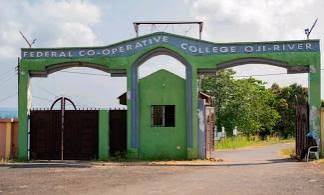
The National Assembly reportedly inserted and approved education-related projects worth at least ₦29.44 billion under the 2026 budget of the Federal Co-operative College, Oji River, Enugu State.
According to SaharaReporters, the allocations cover classroom construction and renovation, hostels, libraries, ICT centres, examination halls, educational materials and other constituency-style projects spread across several states and the Federal Capital Territory.
The projects were identified in pages 731 to 761 of the 2,790-page 2026 Appropriation Act reportedly obtained from the Budget Office of the Federation.
SaharaReporters said the projects were placed under the college’s capital expenditure despite having no obvious connection with its specialised academic responsibilities.
College Gets ₦226.77bn Allocation
The Federal Co-operative College reportedly received a total allocation of ₦226.77 billion in the 2026 budget, with approximately ₦225.63 billion earmarked for capital expenditure.
Of the capital provision, ₦29,444,059,306 was assigned to dozens of education projects across the country.
Federal cooperative colleges were established principally to provide education, training and professional development for cooperative organisations, their managers and members. Official government accounts similarly identify cooperative education, governance, financial management and enterprise development as central to their responsibilities.
The apparent difference between that mandate and the nationwide school projects has raised questions about why the college was selected as the implementing agency.
Largest Projects Listed in Budget
Among the largest allocations identified by SaharaReporters were:
- ₦6.5 billion for lecture theatres, faculty buildings, hostels and perimeter fencing in selected locations nationwide;
- ₦2.1 billion for male and female hostels in selected schools;
- ₦2 billion for constructing and furnishing technical schools in the South-West;
- ₦1.4 billion for laptops and ICT support for undergraduates;
- ₦1.05 billion for ICT centres in selected South-South locations.
Another ₦700 million was provided for digital learning devices and smart resources in Kogi Central Senatorial District, while ₦700 million was allocated for the renovation of selected schools in Enugu State.
Ogun Schools Receive Multiple Allocations
The budget reportedly allocated ₦280 million each for furnishing and equipping classroom blocks in several Ogun communities.
Institutions listed as beneficiaries included Baptist Boys High School, Abeokuta; Remo Secondary School, Sagamu; Abeokuta Grammar School; Anglican Girls Grammar School, Ijebu-Ode; Olabisi Onabanjo University; Tai Solarin University of Education; Ijebu-Ode Grammar School; and Mayflower Secondary School, Ikenne.
₦350m Projects Spread Across Constituencies
Several projects received allocations of ₦350 million each, including classroom blocks in selected federal constituencies and school rehabilitation in Amuwo-Odofin.
Other allocations covered classrooms for children of underprivileged farmers in Oju/Obi Federal Constituency, projects in Nasarawa South, school interventions in Ebonyi, an e-learning library in Ago-Iwoye and a female hostel at Usman Danfodio University, Sokoto.
Three examination halls in Adamawa North Senatorial District were also allocated ₦280 million each.
Projects Cut Across Several States
In Lagos, the budget provided ₦280 million for selected school renovations in Lagos Island 1 Federal Constituency and ₦210 million for educational materials.
Other entries included:
- ₦245 million for accommodation for medical students at the University of Delta;
- ₦210 million for classroom projects in Delta, Akwa Ibom and the FCT;
- ₦175 million for instructional materials in Ifo/Ewekoro;
- ₦175 million for a back-to-school programme in Dala;
- ₦175 million for a CBT centre in Katsina Central;
- ₦175 million for educational materials in Osun West.
Further allocations covered schools and education programmes in Anambra, Cross River, Benue, Kaduna, Kano, Imo, Akwa Ibom, Edo, Bayelsa, Rivers and other states.
Questions Over Accountability
The projects cut across primary, secondary and tertiary institutions, with several beneficiaries having no apparent administrative relationship with the Federal Co-operative College.
The arrangement raises questions about which institution will conduct the procurement, supervise implementation and account for the public funds.
SaharaReporters also observed that multiple entries appeared similar in nature, including repeated allocations for classroom construction, school furnishing, educational materials and ICT interventions across constituencies.
The findings remain allegations arising from the publication’s review of the appropriation document. No response from the National Assembly, the Budget Office or the Federal Co-operative College was contained in the report provided.
READ MORE:
The Debt-to-Survival Crisis: Nigeria’s 2026 Budget
Nigeria’s Youth and the Culture of Public Accountability