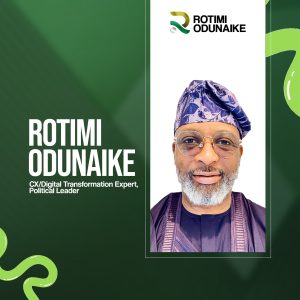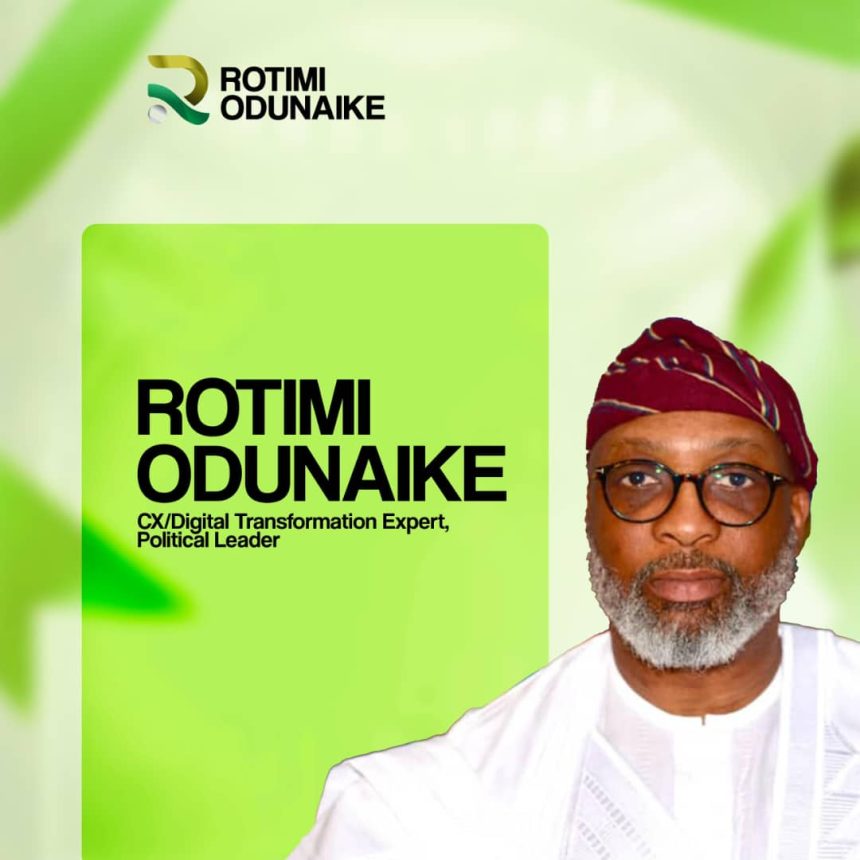
Local Government Autonomy: For twenty-six years, the Nigerian local government system has been the “victim-at-the-center” of our democratic experiment. Since the return to civilian rule in 1999, the 774 Local Government Areas (LGAs) the tier of government closest to the pulse of the people, have been treated not as a constitutional sphere of authority, but as a colonial outpost of the State Government Houses.
As a Digital Transformation expert, I look at governance through the lens of systems and architecture. If Nigeria were a software, the Local Government module has been intentionally “bugged” to ensure it never functions independently. Today, we stand at a crossroads where judicial pronouncements are clashing with political desperation.
The Architect’s Flaw: 1999 and the Birth of the “Joint Account”
The tragedy began with the 1999 Constitution. While Section 7(1) explicitly guarantees a “system of local government by democratically elected local government councils,” the same document introduced the State Joint Local Government Account (SJLGA) under Section 162(6).
This became the “kill-switch” for grassroots development. For decades, Governors have used the SJLGA to intercept, divert, and “tax” federal allocations. In Lagos, for instance, despite the ambitious goals of the Lagos State Development Plan (2012–2025) to foster “inclusive governance,” the reality has been a centralized grip where LGAs and LCDAs are often reduced to paying salaries and cleaning gutters, while the “big ticket” infrastructure and revenue remain locked in Alausa. The LSDP itself admits that “overlapping roles” and “funding delays” have hampered the efficiency of these councils.
The Landmark Judgment: AGF v. AG Abia & 35 Ors (2024)
The July 11, 2024, Supreme Court ruling was supposed to be the “Emancipation Proclamation” for our LGAs. The apex court was unequivocal:
Direct Funding: Federal allocations must go straight to the LG accounts.
Caretaker Committees are Illegal: Any state operating without an elected council is in breach of the Constitution.
Financial Starvation: The court empowered the Federal Government to withhold funds from states that refuse to hold local elections.
But has this changed the “Customer Experience” of the average Nigerian at the grassroots? No.
The Subterfuge: What the FG Isn’t Telling Us
While the Tinubu administration takes a victory lap for “liberating” the LGAs, there is a deeper political game at play. By bypassing Governors and funding LGAs directly, the Federal Government is essentially creating 774 new “centers of patronage” directly loyal to the center. This isn’t necessarily about “autonomy”; it is about a strategic redistribution of political leverage ahead of 2027.
Furthermore, the President’s administration has a checkered record with the “rule of law” when it conflicts with political survival. While they pushed for this judgment, we see a deafening silence when state-run electoral commissions (SIECs) conduct “sham” elections where the ruling party in the state wins 100% of the seats. Is an “autonomy” run by puppets truly autonomy?
The Hall of Shame vs. The African Standard
We see states like Anambra attempting to circumvent the Supreme Court by passing state laws that force LGAs to pay a percentage of their “autonomous” funds back into state-controlled “consolidated” accounts. This is legislative banditry. Similarly, states like Kogi, Bauchi, and Kwara have historically treated LG seats as political rewards for party thugs rather than administrative offices.
In contrast, we should look at South Africa, where the Constitution recognizes local government as a distinct “sphere” rather than an “appendage.” South African municipalities have constitutionally protected revenue-raising powers (like property rates) that prevent them from being “beggars” at the provincial table. Or look at Rwanda, where the “Imihigo” (performance contracts) system ensures that local leaders are digitally tracked and held accountable directly by the citizens they serve.
The Likeliest Way Forward: A Digital & Structural Reset
The “tussle” between Governors and the LGAs will continue as long as the SIECs (State Independent Electoral Commissions) remain under the thumb of Governors.
The way forward is not just in courtrooms, but in Digital Transformation:
Abolish SIECs: Move local government elections to INEC to ensure a shred of credibility.
Direct Digital Auditing: Implement a blockchain-based tracking system where every Naira sent to an LGA is visible to the public. If a Chairman spends 40% of his budget on “administrative overhead” (consulting his Governor), the system should flag it.
Revenue Sovereignty: LGAs must be empowered to collect and keep local taxes without “remitting” them to the state’s central pool first.
The “Ghost” of autonomy will only become flesh when we stop treating the 774 LGAs as the Governors’ “slush fund” and start treating them as the engine room of national development. Until then, the Supreme Court judgment is just a beautiful document in a very ugly system.
Rotimi Odunaike is a CX Expert and a leading voice in the push for a digitally-driven, accountable Nigeria.
Related:
- THE CULTURE CULL: Why Our Government is Selling Nigeria’s Soul for a Colonial Knock-Off. By Rotimi Odunaike
- The Education Lockdown: Nigerian Youth Decry Government’s Response to School Insecurity By Rotimi Odunaike