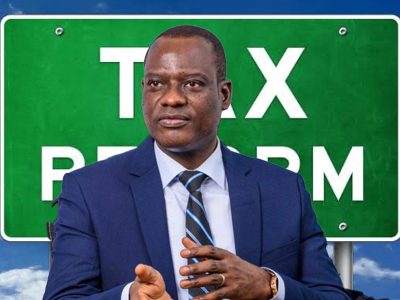
The Chairman of the Presidential Committee on Fiscal Policy and Tax Reforms, Mr. Taiwo Oyedele, has assured Nigerians that the new tax laws scheduled to take effect in January 2026 will not place additional financial pressure on ordinary citizens.
Speaking during an interactive session with journalists in Lagos on Friday, Oyedele said the reforms are meant to protect low-income earners and small businesses, while ensuring that wealthy individuals and large corporations contribute their fair share to national development.
According to him, widespread fear surrounding the reforms is being driven by misinformation, especially claims that the government will begin deducting money directly from citizens’ bank accounts.
“Let me be very clear,” Oyedele said. “Nobody will debit your account. There is no law—existing or new—that allows government to simply take money from your bank account.”

He explained that under Nigerian law, tax payments must follow due process, including official notices, proper assessment, the right to challenge the claim, and a court order where necessary.
Who Will Really Pay More Tax?
Oyedele clarified that the reforms are mainly targeted at the top two per cent of earners in the country, not market traders, artisans, or salary earners struggling to survive.
He disclosed that about 97 per cent of small businesses in Nigeria will pay zero Company Income Tax (CIT) under the new law. Any business with an annual turnover below ₦100 million will not pay corporate tax at all.
For bigger companies, the current CIT rate of 30 per cent, which has existed since 1996, will be reduced to 25 per cent, a move he said would attract investors and encourage economic growth.

“You won’t even get close to paying 25 per cent tax unless you earn at least ₦20 million a year,” he noted.
No Automatic Bank Monitoring for Small Earners
Addressing concerns about bank monitoring, Oyedele explained that banks are only required to report accounts with transactions of ₦25 million or more in three months, or ₦100 million in a year.
“If your account does not reach that level, there is nothing to worry about,” he said, adding that the Taxpayer Identification Number (TIN) requirement is not new and does not mean automatic taxation.
Stock Market Investors Largely Exempt
Oyedele also dismissed fears among investors, saying over 99 per cent of stock market investors will not pay Capital Gains Tax (CGT).
He explained that anyone who sells shares worth ₦150 million or less in a year, with profits not exceeding ₦10 million, is permanently exempt from CGT.
Even large investors can avoid CGT entirely by reinvesting their gains into the stock market, he said.
Why the Reform Matters
According to Oyedele, the tax reforms aim to end multiple nuisance taxes, reduce pressure on the poor, modernise the tax system, and encourage voluntary compliance.
He insisted that the government has shown sincerity by engaging stakeholders continuously and will continue consultations to ensure smooth implementation.
“There is no need to panic,” he said. “These reforms are meant to make life easier for Nigerians, not harder.”
Source: Media interaction by the Presidential Committee on Fiscal Policy and Tax Reforms
Also Read: