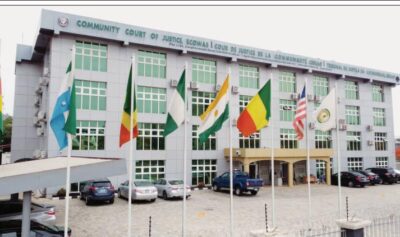
The Socio-Economic Rights and Accountability Project (SERAP) has taken the Federal Government before the Community Court of Justice of the Economic Community of West African States (ECOWAS), seeking answers over more than ₦78.8 billion allocated to cash-transfer and social protection programmes.
The action, marked ECW/CCJ/APP/42/26, challenges alleged financial irregularities identified in the Auditor-General of the Federation’s 2024 Annual Report.
The report, published on August 7, 2026, identified deficiencies in the financial administration of programmes involving the National Cash Transfer Office (NCTO) and the National Social Safety Nets Coordinating Office (NASSCO).
WHAT HAPPENED TO THE MONEY?
SERAP’s application identifies several areas of concern, including approximately:
- ₦33.751 billion in cash transfers for which adequate payment and beneficiary records were reportedly not produced.
- ₦36.744 billion in payments reportedly made without prepayment audits.
- ₦4.616 billion in expenditure for which supporting documents were reportedly unavailable.
Other questioned transactions include enrolment payments, store purchases and diesel advances.
SERAP argues that the government must establish whether the funds were properly administered, whether eligible beneficiaries received the intended assistance and whether the identified financial deficiencies were investigated.
Importantly, the organisation acknowledges that audit queries do not, by themselves, establish that the entire sum was stolen or that criminal wrongdoing occurred.
HUMAN RIGHTS DIMENSION
The organisation contends that accountability in public expenditure has direct implications for the protection of economic and social rights, particularly where public resources are allocated to vulnerable households.
It is relying on relevant provisions of the African Charter on Human and Peoples’ Rights and the United Nations Convention against Corruption.
SERAP is asking the regional court to compel the Federal Government to provide a comprehensive account of the questioned expenditure, investigate the identified irregularities, recover any funds established to have been improperly spent and strengthen financial oversight mechanisms.
It is also seeking measures to ensure that eligible households receive the social protection benefits intended for them.
WHAT SERAP WANTS THE COURT TO DETERMINE
Beyond financial accounting, the proceedings raise a significant question about the relationship between public financial accountability and the state’s human rights obligations.
SERAP maintains that government responsibility extends beyond allocating funds to ensuring that the money reaches the people for whom it was appropriated.
The case places the management of social protection programmes under regional judicial scrutiny.
The ECOWAS Court has yet to determine the substantive claims.
LegalLinkz will continue to monitor the proceedings and their implications for public accountability and access to social protection in Nigeria.
Related reports

behind Games Village, Abuja
5A, CGH, Games Village, Abuja