
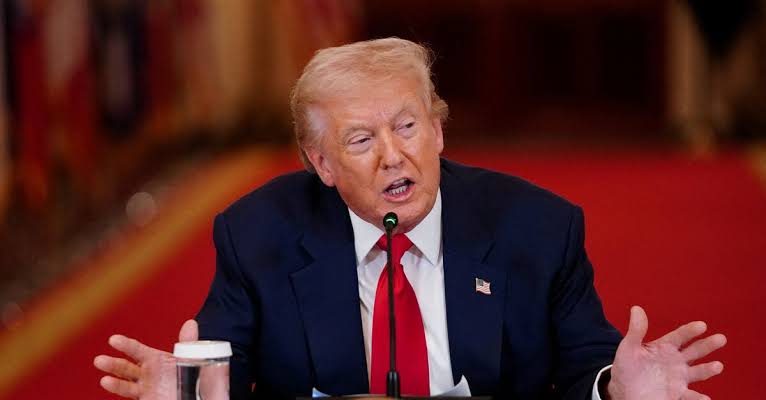
A United States federal judge has rejected an attempt by President Donald Trump’s administration to disqualify the law firm Susman Godfrey from representing the American Bar Association (ABA) in an ongoing lawsuit challenging the administration’s treatment of legal practitioners and law firms.
The ruling represents a significant development in the legal confrontation between the Trump administration and sections of the American legal profession over executive actions affecting lawyers and their independence.
US District Judge Amir Ali dismissed the government’s application after finding insufficient grounds to remove Susman Godfrey from the proceedings.
The administration had argued that the firm’s involvement in related matters created a potential conflict of interest, particularly because some of its lawyers could become witnesses in the litigation.
However, the court was not persuaded that the circumstances justified disqualifying the firm from continuing its representation of the American Bar Association.
The judge found that the government had not established a sufficient basis for concluding that lawyers from Susman Godfrey would improperly act as both witnesses and legal representatives in the case.
The decision is particularly important because the underlying lawsuit raises broader questions about the relationship between executive power and the independence of the legal profession.
The American Bar Association has challenged what it considers unlawful targeting of lawyers and law firms based on matters including political affiliations, employment practices and diversity policies.
Susman Godfrey itself had previously been affected by executive actions directed at law firms, some of which were subsequently blocked by federal courts.
The dispute has attracted attention within the American legal community because of its potential implications for lawyers’ ability to represent clients in politically sensitive cases without fear of government retaliation.
Legal professional independence is widely recognised as an essential component of the rule of law. Lawyers must be able to discharge their professional duties without improper interference, intimidation or punishment arising solely from the clients or causes they represent.
The latest ruling does not determine the merits of the American Bar Association’s underlying lawsuit. Rather, it allows the association to continue its legal challenge with its chosen representation.
The case, American Bar Association v. Executive Office of the President, remains part of a wider series of legal disputes concerning executive authority, professional independence and constitutional protections in the United States.
For lawyers and bar associations beyond America, the proceedings raise an important question: how far can executive power extend before it threatens the independence of the legal profession?
As the litigation continues, the outcome could have implications for the protection of lawyers and the ability of professional associations to challenge government actions through the courts.
Related Reading:
Arise Journalist Murder Trial: Court Watches Suspects’ Police Video
US Probes TV Networks Over Trump Coverage Boycott
American Bar Puts AI and Merger Rules on Training Agenda
US Judge Blocks Trump’s White House Media Restrictions Reuters

behind Games Village, Abuja
5A, CGH, Games Village, Abuja