


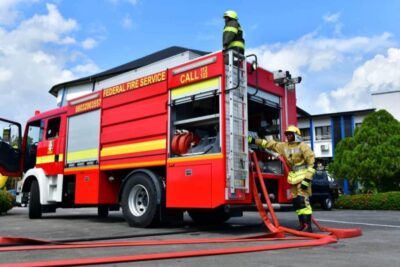
The Federal Government is preparing to replace Nigeria’s 1963 Fire Service Act with a new legal framework designed to transform the Federal Fire Service into a broader emergency response and rescue agency.
The Minister of Interior, Olubunmi Tunji-Ojo, disclosed the proposed reform during the 2026 National Fire Safety Week in Abuja, explaining that the existing legislation no longer provides an adequate legal foundation for the demands of modern emergency management.
The proposed legislation, to be known as the Federal Fire and Rescue Service Act, is expected to expand the agency’s statutory responsibilities beyond conventional firefighting.
Under the proposed framework, the Federal Fire Service would have an expanded mandate to respond to road traffic accidents, flooding, hazardous materials incidents, toxic gas leaks and other emergencies.
The agency would also be empowered to provide first aid and emergency medical assistance as part of its rescue responsibilities.
Why the existing law is being reviewed
The Minister said the current legislation, which dates back more than six decades, restricts the Service’s ability to respond effectively to emergencies beyond traditional firefighting operations.
He stressed that government agencies require clear statutory authority to perform their responsibilities lawfully and effectively.
The proposed reform is intended to provide the legal foundation for a more comprehensive emergency response system, with a wider range of operational responsibilities.
Tunji-Ojo disclosed that the proposed legislation had undergone the necessary defence process and was scheduled to be presented for legislative consideration.
This means the proposal should not yet be treated as an enacted law. Its implementation will depend on the required legislative process and presidential assent.
National Fire Academy and wider operational capacity
The Minister also disclosed that the Federal Government was constructing a National Fire Academy in Kwali, Abuja, with completion expected by December 2026.
The facility is designed to accommodate more than 3,000 trainees and provide specialised training for firefighters and emergency response personnel.
He further disclosed that the operational commands of the Federal Fire Service had increased from six to 18 as part of efforts to strengthen its nationwide presence.
The Minister also advocated the introduction of basic rescue techniques, first aid and lifesaving skills into Nigeria’s school curriculum.
What the proposed law could mean for Nigerians
If enacted and effectively implemented, the proposed law could significantly change the role of the Federal Fire Service in Nigeria’s emergency management structure.
Beyond responding to fires, the Service could become a more integrated emergency response institution, with responsibilities covering rescue operations, accident response and disaster intervention.
However, expanding the agency’s legal mandate will also require adequate funding, trained personnel, modern equipment, operational coordination and clear procedures for working with other emergency agencies.
The legislative process will therefore be important in determining the precise powers, responsibilities and accountability framework of the proposed Federal Fire and Rescue Service.
Related News :
– Federal High Court Awards ₦10 Million Against Police Over Rights Violation


behind Games Village, Abuja
5A, CGH, Games Village, Abuja